Cold Foil + Spot UV
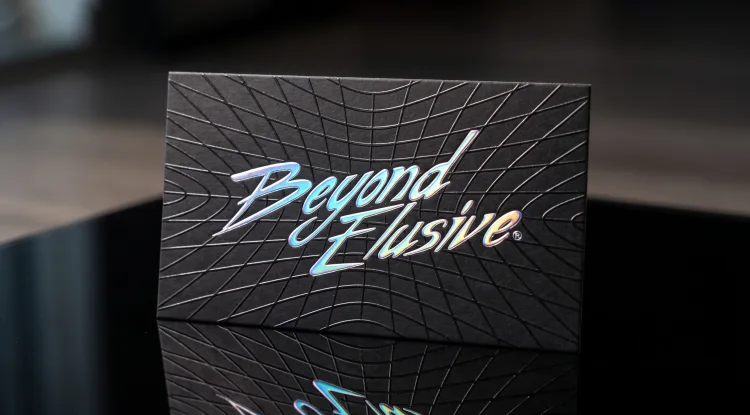
Learn about Spot UV →The standout pairing — selective gloss and touch on top: soft foil color underneath, sharp glossy highlights above, and a surface that changes as the card moves in the hand.
Cold Foil gives the full card a silk-on-foil surface — a soft matte metallic look rather than a mirror-shiny foil. Add Spot UV on top and the contrast becomes the real power: matte metallic underneath, glossy detail above.
From $153 · 250 cards
The standout pairing — selective gloss and touch on top: soft foil color underneath, sharp glossy highlights above, and a surface that changes as the card moves in the hand.
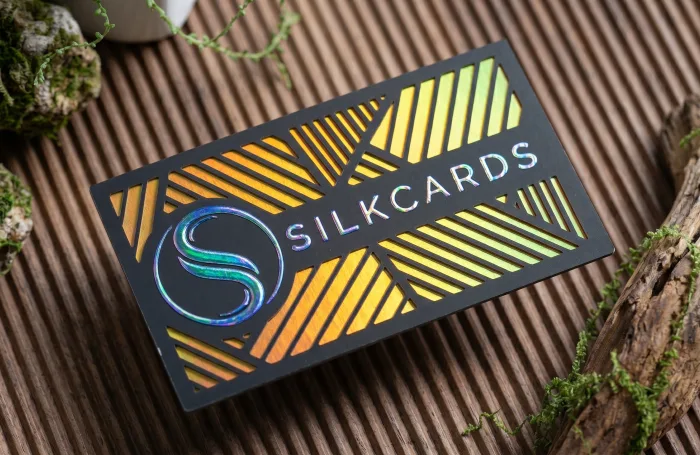
Custom die cutting shapes the card while the silk-on-foil surface carries the matte metallic look across the full printed design.
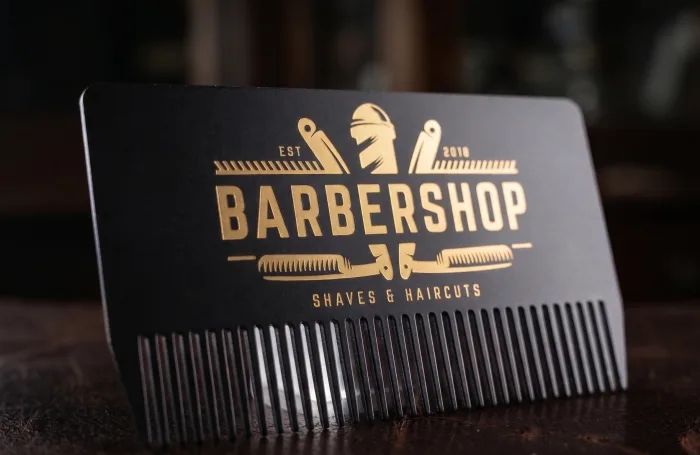
Colored edges and rounded corners round out the pairing list — finishing touches on the same 28pt silk-on-foil stock.
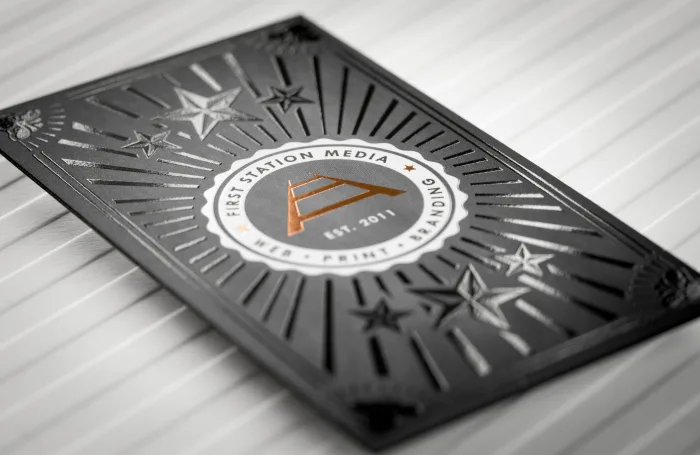
Embossing is on the Cold Foil pairing list — pressed dimension beside the smooth matte metallic face, all on a 28pt silk-on-foil stock.
Real feedback from trusted professionals who expect more than ordinary business cards.
We've helped brands turn paper, foil, texture, and finish into confidence that makes stronger first impressions.
Get a sample kit and experience the shine, texture, weight, and finish for yourself.
Get guidance on the right combination of foil, stock, texture, and edge detail.
“I cannot thank this company enough! My business cards are absolutely fabulous and I have received so many compliments on them. The pictures will not do them justice. I got the suede finish, 48 pt thick cards with silver foil on one side and the edges. They are so luxurious.”
Cold Foil is for designs where color, pattern, and surface mood matter. It gives the whole card a matte metallic foundation, then Spot UV can be used to create controlled shine where it matters most.
For designers, agencies, artists, and creators who want color with a soft metallic edge — the whole card gets a matte metallic foundation, then your artwork prints over it.
Explore agency ideas →Hot foil stamping adds shiny foil to selected details. Cold Foil gives the whole card a silk-on-foil foundation, then your artwork prints over it. The result is a smooth matte metallic look across the design — not a mirror finish, and not raised.
Cold Foil is not raised and not mirror-shiny. It creates a soft metallic foil look under a silk finish across the card face.
The strength is not one stamped foil color. It is full-color design with a matte metallic character across the entire surface.
Cold Foil is subtle until the card moves in the hand. With Spot UV, the glossy areas catch attention against the matte metallic base.
The metallic effect sits under SilkCards silk lamination on a 28pt stock, so the surface resists fingerprints, scuffs, and everyday handling.
Photos show the color. Video shows the Spot UV contrast. The sample kit proves the finish — Cold Foil is subtle until the card moves in the hand, and the kit ships free.
Pair with a SilkCards design consultant and designer to turn your idea into a print-ready Cold Foil card — Cold Foil is specialized, proper artwork setup matters, and we flag white or light areas on your proof.
Keep Exploring
Cold Foil's standout pairing and a finish of its own — selective gloss that creates strong contrast against a matte base.
Explore Spot UVSelected details that are shiny, metallic, and tactile — where Cold Foil turns the entire design matte metallic instead.
Explore Raised FoilA card made from actual metal stock — cold foil delivers the metallic look on a lightweight, mailable, full-color paper card instead.
Explore Metal
The strength is not one stamped foil color. It is full-color design with a matte metallic character across the entire surface — flat, smooth, and silk-laminated.
The surface underneath is a silver foil, so anything printed white reads as silver unless we white-block that area first — which returns a soft ivory rather than a pure bright white. It is worth planning for in your artwork, and we flag it on your proof.
Cold Foil gives the card a smooth matte metallic base. Spot UV adds selective gloss and touch on top: soft foil color underneath, sharp glossy highlights above, and a surface that changes as the card moves in the hand.
Hot foil stamping is best for shiny metallic accents such as logos, names, or borders. Cold Foil is best when the whole design needs a matte metallic color effect across the surface.
✓ You want the entire design to have a matte metallic color effect — not a few shiny accents.
✓ You want full-color artwork — gradients, patterns, photography — with a soft foil character across the card.
✓ You want the metallic look without the weight or cost of a metal card.
✓ You want a flat, smooth surface — not raised, and not mirror-shiny.
✓ You want to add Spot UV on top for glossy detail against the matte metallic base.
The standout pairing: selective gloss and tactile contrast against the matte metallic base.
White reads as silver unless we white-block it first — that returns a soft ivory. We flag it on your proof.
Cold Foil turns the entire design matte metallic; Raised Foil makes selected details shiny, metallic, and tactile.
Hot foil is for shiny accents like a logo or name; Cold Foil is a matte metallic effect across the whole surface.
Embossing, custom die cutting, colored edges, additional spot foil, raised UV, and rounded corners — all on a 28pt silk-on-foil stock.
Request a Free Sample Kit and compare the matte foil base with Spot UV under real light.
A screen can show the color, but it cannot fully show the matte foil base or the glossy Spot UV contrast. The finish becomes real when you hold the card and tilt it under actual light.
Each foil method has a different job. Choose the one that matches what your card needs to communicate.
| Question | Cold Foil | Hot Foil | Raised Foil |
|---|---|---|---|
| What it does | Creates a silk-on-foil matte metallic surface across the full printed design. | Adds metallic foil to selected details such as a logo, name, border, or pattern. | Adds metallic detail with tactile height so the finish can be felt by the thumb. |
| Best for | Full-color artwork, matte metallic mood, and dramatic Spot UV contrast. | Premium accents and clean contrast. | High-impact logos and tactile authority. |
| Shine level | Matte — a soft foil look under silk lamination. The high-gloss effect comes from adding Spot UV on top. | Shiny metallic accents. | Shiny, metallic, and tactile. |
| Choose it when | The whole design needs a matte metallic color effect across the surface. | You want shiny metallic accents such as logos, names, or borders. | You want selected details to be shiny, metallic, and tactile. |
The material has personality, but it is not a high-shine chrome finish. The strongest Cold Foil cards use matte metallic color as the base and Spot UV as the contrast layer.
Gradients, deep color fields, textures, and rich artwork perform especially well on the matte metallic base.
Dark areas, open space, and gloss details help the Spot UV contrast stand out.
The surface feels more premium when the matte foil base and glossy UV details have room to separate.
Cold Foil is especially effective for full-color designs, gradients, patterns, and photography — the foil base adds a soft matte metallic character.
Anything printed white reads as silver unless we white-block it first, which returns a soft ivory. We flag it on your proof.
Cold Foil is specialized. Proper artwork setup matters for the final result.
The material has personality, but it is not a high-shine chrome finish. These are the choices to avoid — and what to do instead.
Cold Foil is not mirror-shiny. It has a matte foil look because it is silk on foil.
The high-gloss effect comes from adding Spot UV on top, creating strong contrast against the matte metallic base.
The surface underneath is a silver foil, so anything printed white reads as silver.
We white-block that area first, which returns a soft ivory rather than a pure bright white — and we flag it on your proof.
Designs need enough open space for the matte metallic surface and Spot UV contrast to show.
The surface feels more premium when the matte foil base and glossy UV details have room to separate.
The essentials most buyers ask before choosing Cold Foil — short and to the point.
A foil-based surface with SilkCards silk lamination over it, creating a smooth matte metallic look across the full design. Full-color artwork takes on a soft foil character across the card.
No. It has more of a matte foil look because it is silk on foil. The high-gloss effect comes from adding Spot UV on top.
Flat and smooth. It creates a matte metallic print effect across the card face without adding tactile height.
Choose Cold Foil when the entire design should have a matte metallic color effect. Choose Raised Foil when selected details should be shiny, metallic, and tactile.
Cold foil business cards use a foil-based surface with SilkCards silk lamination over it, creating a smooth matte metallic look across the full design. Unlike hot foil stamping, which adds shiny foil to selected details, Cold Foil gives full-color artwork a soft foil character across the card.
Yes — cold foil is how SilkCards delivers a metallic business card on paper. Full-color artwork prints across a 28pt silk-on-foil stock, giving the whole card a soft matte metallic surface rather than a few shiny accents. If you have searched for “metallic” or “metallic finish” business cards and want that look without the weight of metal, cold foil is the card you are picturing.
Hot foil stamping is best for shiny metallic accents such as logos, names, or borders. Cold Foil is best when the whole design needs a matte metallic color effect across the surface.
Choose Cold Foil when you want the entire design to have a matte metallic color effect. Choose Raised Foil when you want selected details to be shiny, metallic, and tactile.
No. Cold foil is a paper business card with a metallic foil surface, so you get the metallic look on a lightweight, mailable, full-color card. A metal business card is made from actual metal stock. If you want the metallic appearance without the weight or cost of metal, cold foil is the paper-based way to get it.
Cold Foil is flat and smooth. It is not raised, and it is not a mirror-shiny foil finish. It creates a matte metallic print effect across the card face without adding tactile height.
No. SilkCards Cold Foil has more of a matte foil look because it is silk on foil. The high-gloss effect comes from adding Spot UV on top, which creates strong contrast against the matte metallic base.
Yes. Cold Foil is especially effective for full-color designs, gradients, patterns, and artwork where the foil base adds a soft matte metallic character.
Yes. Spot UV is one of the strongest ways to use Cold Foil. It adds selective gloss and tactile contrast on top of the matte metallic surface, creating a dramatic difference between the soft foil base and the glossy design details.
Spot UV is the standout pairing, but Cold Foil also combines with embossing, custom die cutting, colored edges, additional spot foil, raised UV, and rounded corners — all on a 28pt silk-on-foil stock.
Cold Foil works best with bold color, gradients, deep contrast, photography, patterns, and designs that leave enough open space for the matte metallic surface and Spot UV contrast to show.
The surface underneath is a silver foil, so anything printed white reads as silver unless we “white-block” that area first — which returns a soft ivory rather than a pure bright white. It is worth planning for in your artwork, and we flag it on your proof.
Yes. The metallic effect sits under SilkCards silk lamination on a 28pt stock, so the surface resists fingerprints, scuffs, and everyday handling while keeping its matte metallic finish. It stays light and mailable as a paper card — more durable than an uncoated print, without the weight or sharp edges of a metal card.
Yes. The best way to understand Cold Foil is to request a Free Sample Kit and compare the matte foil base with Spot UV under real light.